
Business Without All the “Shoulds”
Systems strategist Andrea Reeves on building tools and processes that fit you instead of forcing yourself into templates that don’t
From DIY to Supported: A Series for Solopreneurs and Business Owners Who Know It’s Time for Help, But Don’t Know What to Google

Make it stand out
Whatever it is, the way you tell your story online can make all the difference.
When you’ve been in business for a little while, you start to hear one word over and over: systems. You hear how important they are for staying organized, saving time, and running your business without constant stress. And if you’ve read any of this DIY to Supported series, you’ve probably noticed that many of the people I’ve interviewed mention systems too.
But what even is a system? Some people say the word like it means software. Or an inbox setup. Or something complicated and automated. But a system doesn’t have to be complex to work. It’s simply a set of processes that work together to help your business run more smoothly.
In this interview with Andrea Reeves, systems strategist and founder of Type C Creative, we get a closer look at what systems support looks like. Andrea helps solopreneurs build systems that support both their business and their nervous system. She talks about ditching the “shoulds”, when you are (and aren’t) ready for hiring a systems strategist, and how to design our business to better support neurodivergent clients.
What I love about Andrea’s approach (besides the systems focus!) is how she builds boundaries and clarity into her work, two things that make business easier to manage, especially for people with different brains or limited energy.
How do you usually describe what you do and who seems to get the most excited or helped by it?
I help solopreneurs build systems that support their business and their nervous system. I typically attract a lot of AuDHD/ADHD and/or creative folx who get overwhelmed or bored with the administrative aspects of their business.
What’s your origin story? How did you end up doing this kind of work, and what pulled you into it?
I studied journalism in college but have ALWAYS been drawn to organization/project management. In my senior year, I started a business called Pretty Planners. I would charge $50 a pop to load everyone's syllabi into their planners for the semester and then make them "pretty" — adding highlighters, stickers, and inspirational quotes alongside their upcoming assignment deadlines and test dates. The thing about systems and organization I really like/am drawn to is the customization piece. When our systems look and feel like us, it gives us more motivation to keep going with them.
After grad school, I became a copywriter and then a corporate communications manager. I was absolutely miserable in those roles, leaning heavily on the systems I created to stay organized and grounded in a work world that was far too intense for my nervous system.
Once I was diagnosed with ADHD, I started going down the rabbit hole of "productivity" tips and accommodations that work for brains like mine, but still felt really overwhelmed by the concept of being productive and what that looked like for me. It started to make sense why I was always so overwhelmed and burnt out in my career: I was trying to follow rules that weren't built with me in mind. Type C Creative was birthed out of a deep desire for relief and enjoyment in my work, and I love that my work now provides that for other people too.
When someone says, “Wait, what do you actually do?”, what’s your way of explaining it without sounding like a job listing?
LOL, it's hard for me to do this! I can be such a tech nerd sometimes that I forget not everyone knows what a CRM (Customer Relationship Management) system is, or what I even mean when I say the word 'systems.' Basically, I help business owners create processes and choose/customize the software they use to run their business so they can run their business with more ease.
When we're first starting a business, or perhaps in the varying growth stages of our business, it's easy to get swept up in the shoulds. I should be using this popular software, I should be on social media, I should be adding more automations to my workflow, I should be figuring out how to use AI. I help my clients brush away all the shoulds and get to the root of what their needs are and what tools/resources can support them.
I give them permission to say 'no' to the shiny fads, the false promises of productivity and efficiency, and step into systems that will actually do what they need them to do. I do that through systems audits, taking inventory of all the software, tools, and processes they're using to run their business and seeing where the gaps are. I do that through custom software builds, like helping a client set up their online community software and onboarding flow. I do that through migration services, like helping a client move from one email marketing platform to another without the stress or second-guessing. I help clients go from idea to execution, thinking through all the logistical/technical details of a launch so they can focus on what they do best.
If the business owners I work with are leads in a play, I'm their stage hand, making sure the sets are built and all the performances run smoothly.
How can a business owner tell they’re ready for systems support and what should they actually be paying attention to when hiring one?
Well, if you are new to business, I'd recommend holding off. The best thing you can do in the first and second year of business is take note of how things work, where the gaps seem to be, and what small changes you can make as you continue to figure out what your business actually is.
If you find yourself with a lot of 'shoulds' haunting you, maybe find a systems person who offers an hour-long strategy session or a free newsletter/resources to help talk you off the ledge or point you in the right direction. This is the point where your business can be held together by duct tape. It's totally normal and expected! Any formal system or software you set up will most likely change, so it may not be the best use of your time or money.
Once you come up on year three, or get to a point where you are bringing in a steady amount of clients/customers, it's likely time to bring in an expert to help you level up your systems. Perhaps you're disorganized to the point where you're feeling overwhelmed, burnt out, or like you're losing business. Maybe you're considering contracting out some work to a virtual assistant or freelancer and you need someone to help you streamline your processes and prepare for onboarding. Maybe the admin side of your business is just sucking the life out of you, or you want to create a better balance between work and life. Most people come to me when they are reaching a crossroads—they know what they're doing from a product or service perspective, but feel like there has to be a better way to execute/deliver.
In terms of what to pay attention to when hiring systems support, I would ask questions about their approach to systems and customization. There are a lot of operations people out there, and it's very common for people to specialize in specific software—which isn't inherently a bad thing. But if you are someone who likes options, and wants to make sure someone is recommending tools that fit your needs and preferences vs. customizing their tool of choice to try to fit your needs and preferences, it's good to be honest about that upfront.
Also, decide if you are looking for someone to consult/give you guidance or actually set things up for you. If they do set things up for you, what does the training/after care look like? I would also take a look at their values to see if they're aligned with yours. For example, ask them about their approach to AI and share a little bit about any boundaries or hesitations you have around that.
What experiences have shaped the way you work with clients? Are there any personal principles or quirks that guide how you run your business?
My retainer clients will tell you that I have boundaries like no other. When you work in the admin space, it's really easy to feel like you're "on call" in a sense. I learned from my time in the corporate world that environments that foster a sense of urgency don't work for me, and often build a lot of resentment over time. Something can be important but not urgent. Something can require a quick response without being urgent. Earlier this year, I bought a separate work phone and deleted every work-related app from my personal phone, including email. It reminds me that while my work and clients are important to me, they do not own all my time and attention. I am allowed to go to the grocery store or go for a walk or get my hair done and not be "on call."
Clarity is also really important to me. I try to almost over-communicate my boundaries, time off, delays, etc. as a way of lessening my own anxiety and providing space to clear up any misunderstandings. I am typically a pretty passive personality so this doesn't always come easily to me, but I almost always feel better after. I've started putting a 'boundaries and expectations' section in my contracts that outline how I operate as a way of starting on the right foot. I've had too many experiences with past clients where I tried implementing boundaries way after they were already crossed.
Bookkeeping and systems support often help the same clients in different but connected ways. What changes when a bookkeeper is already in place before you step in?
This is a funny question, because I've always gotten along very well with bookkeepers. Both of our jobs require a high level of organization and detail, so I've found we often appreciate each other and work well together if our paths do cross.
Because I'm not a financial expert, I don't really mess with the bookkeeping process, especially when a professional is already involved. I may help a client find a platform or build a habit that helps them stay organized/on top of things so they can give their bookkeeper what they need, but that's the extent of it usually. In every scenario where there are other people supporting a client in another area of their business, I do my best to understand how their process works and if either of them are experiencing challenges/frustrations that could benefit from an outsider's perspective.
Do you have any strong opinions or frustrations about your industry, things you wish people understood differently?
Ugh, so many, but I'll try to limit it to one!
Potentially one of my hottest takes?! I think software affiliates are detrimental to helping people truly find systems that work for them. I am self-described as "tech agnostic" because, while I do have my personal favorites/preferences, I know that just because a platform could work for someone in theory, doesn't mean it will work for them in practice.
I have met systems people in the past who have made a lot of money recommending a specific project management or productivity platform to their clients. If they really believe that platform will work for their clients' needs, then it's a win-win, I have no problem with that. But when affiliates become a revenue source, I think it can lead to service providers trying to force their tool of choice to fit someone's needs, even if it's not in their best interest. It's such a bummer when a new client comes to me having been convinced to lock into a platform that, from what I could tell, was never going to work for them. I have tried to stay away from signing up for software company's affiliate programs in the last couple of years because, ultimately, I don't want it to impact the recommendations I make to people.
I don't think it's inherently bad, but I do wish people would be more intentional about how and when they make affiliate-based recommendations.
What’s a way we can design our businesses to better work with neurodivergent clients?
There's a lot of shame and embarrassment that can come along with being neurodivergent in a society that is built on white supremacy, capitalism, ableism, and patriarchy. The way our brains work have rarely been celebrated, recognized, or understood. And even though I identify as neurodivergent, neurodivergence is also felt and experienced and expressed differently from person to person. So there is always going to be more to learn, for everyone.
On a conceptual level, I think working better with neurodivergent clients requires adaptability and vulnerability. Are we willing to adjust the way we do things when we're met with someone who needs us to do things differently? Are we willing to examine our black and white thinking so we can better understand the gray areas? Are we willing to make mistakes and be open to feedback for the sake of more clarity, accessibility, and equity?
On a practical level, a simple thing you can do is add options for people to express their needs. On my website, I give people the option to book a phone call or have an email consultation. In my intake forms, I ask people if they prefer their training materials be a screen share video or written instructions with pictures. I tell them that I use an AI transcriber as a personal accommodation during our calls, and encourage them to share any accommodations they may need throughout our time together, whenever they come up.
There is no way to anticipate everyone's needs ahead of time, but in my experience, having multiple touch points throughout the client experience that leaves room for them to express those needs is always appreciated.
Where can people find you online? And is there anything you’d love people to check out or learn more about?
You can find me on Substack! My newsletter is called Rebellious Systems. I write a lot about boundaries, systems, neurodivergence, and how they all intersect. I've got practical tutorials and software reviews as well as some personal essays on there!
I have more info about what I do, software I love, and other free resources on my website: https://www.typec-creative.com/
Bio
Make it stand out
Whatever it is, the way you tell your story online can make all the difference.
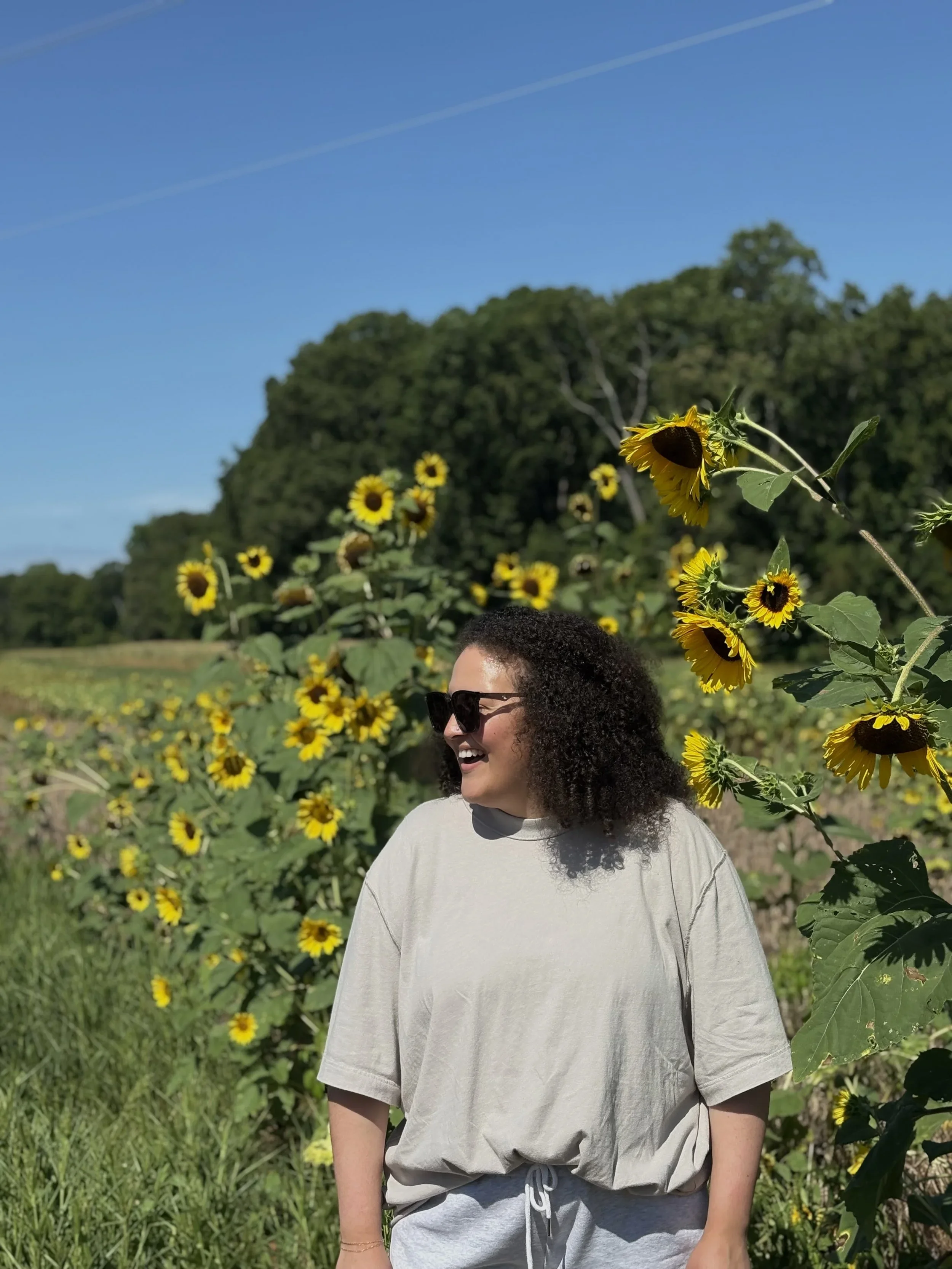
Andrea is the neurodivergent mind behind Type C Creative. With a background in journalism and a Master’s in Management in Entrepreneurial Leadership from Babson College, she merged her natural curiosity with her love of systems and technology to rage against the productivity machine and help people find more compassionate and rebellious ways of working.
Since 2021, she's worked directly with solo entrepreneurs to help streamline their business operations while also honoring their humanity, creativity, and oftentimes their neurodivergence
